No sponsored placements. No brand relationships. Just what we found after putting 14 harnesses through real-world testing on large dogs.
The dog harness market is enormous, poorly regulated, and full of products that look identical but perform completely differently. Most "best harness" lists online are affiliate roundups written by people who have never put the products on a dog. The rankings reflect commission rates, not quality.
We did this differently. Fourteen harnesses. Large dogs ranging from 55 to 90 pounds. Six weeks of daily walks, runs, and reactive-dog situations. Here's what we actually found.
What We Tested For
Escape resistance — Can a determined dog back out of it? A panicked or reactive dog will test every harness to its limit.
Hardware durability — Buckles, D-rings, and stitching under real stress. Cheap buckles crack. Cheap stitching frays.
Fit across body types — Large dogs are not a uniform category. A barrel-chested Bulldog and a deep-chested Greyhound are both "large dogs" and fit harnesses entirely differently.
Ease of putting on and taking off — A harness that requires a 10-step process gets skipped. Skipped means no harness.
Comfort over time — Chafing under the armpits and around the sternum is the most common cause of harness abandonment. We checked for rubbing and irritation daily.
Front-clip effectiveness — Front-clip D-rings redirect pulling dogs. Not all are positioned or reinforced well enough to actually work.
Back-clip security for strong pullers — Back clips give pullers more leverage. Some harnesses mitigate this better than others through strap geometry.

The Rankings
⭐ Tier 1: Genuinely Excellent
Ruffwear Front Range Harness
Four adjustment points, dual clip (front and back), real foam padding that doesn't compress to nothing. After six weeks of daily testing on dogs ranging from 55 to 90 pounds, nothing in this price range comes close. The V-ring front attachment redirects pullers without torquing the neck.

Julius-K9 IDC Powerharness
What working dog handlers use. The chest plate design distributes pressure differently than strap-style harnesses. The single-buckle IDC closure is fast and genuinely secure. Hardware is rated for serious working loads. Runs narrow — size up for wide-chested breeds.

Kurgo Tru-Fit Smart Harness
The only harness on this list crash-tested and certified for use as a car restraint. Steel nesting buckle and padded chest plate designed to distribute force in a collision. Perfectly functional for daily walks too — a strong all-rounder if your dog rides with you regularly.
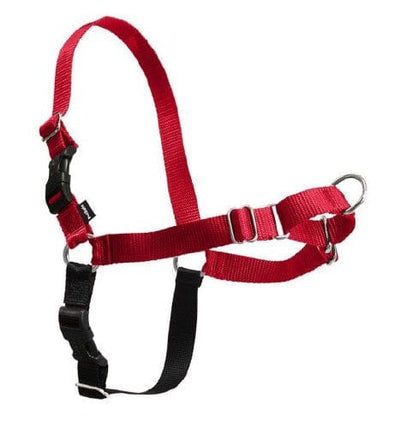
PetSafe Easy Walk Harness
Works for mild-to-moderate pullers at $25. The martingale chest loop redirects pulling effectively for most large dogs. The strap can migrate into the armpit on barrel-chested breeds — check fit regularly. Not a permanent solution for serious pullers, but a solid starting point.

Rabbitgoo No-Pull Harness
The template for about 40% of harnesses on Amazon — many are manufactured from identical patterns under different brand names. Four adjustment points, front and back D-rings, reflective stitching. The fit runs large for dogs under 50 lbs. For large dogs (60+ pounds), it generally fits well.
We won't name specific brands in the bottom tier — the harnesses that failed escape tests, had buckles crack under moderate stress, or caused chafing within a week. What they all had in common: single chest strap with no sternum piece, plastic D-rings instead of metal, foam padding that compressed to nothing within days, no girth adjustment, and a price under $15. If a harness is under $15 on Amazon with 4.7 stars and 12,000 reviews, the stars are almost certainly incentivized. We tested three of these. Two failed escape tests. All three showed chafing within two weeks.

How to Fit a Harness Correctly
A well-designed harness on an incorrectly fitted dog is nearly as bad as a poorly designed harness. Here's what correct fit looks like:
Two-finger rule everywhere. You should be able to slide two fingers under every strap, all the way around. Tighter than that causes chafing and restricts movement. Looser than that is an escape risk.
Chest strap position. The strap across the chest should sit below the throat, not on it, and well clear of the point of the shoulder. If it's sitting on or near the shoulder joint, it will interfere with stride — especially at faster paces.
Sternum piece. Most quality harnesses have a piece that runs along the sternum between the front legs. This should sit flat against the chest, not pulled to one side.
Back piece. Should sit roughly over the midback — not slid back toward the hips, not up against the neck.
After adjusting, give the harness a firm pull from the front clip. The dog should not be able to back out. If they can, tighten — and if you've maxed the adjustments and they still can, this harness doesn't fit this dog.
Front Clip vs. Back Clip: Which Is Right for Your Dog?
Front clip harnesses attach the leash to a ring at the dog's chest. When a front-clipped dog pulls, the leash redirects them to the side, naturally interrupting the pulling behavior. They're significantly more effective for dogs who pull hard.
Back clip harnesses attach the leash between the shoulder blades. They give pulling dogs more leverage and are generally more comfortable for the dog. Better for dogs who already walk well on leash, running, hiking, and dogs who find the front-clip redirect uncomfortable.
Dual clip harnesses (Front Range, Julius-K9, most quality harnesses) give you both options and are what we recommend for most owners. Use the front clip while you're working on loose-leash training; switch to the back clip for runs once the behavior is established.

The Bottom Line
Buy the Ruffwear Front Range unless you have a specific reason to look elsewhere. It fits the most body types correctly, holds up better than anything else we tested at a comparable price, and the front-clip geometry actually works for redirecting pullers.
If you drive with your dog, add the Kurgo Tru-Fit or use it as your primary harness.
If you have a genuinely powerful dog who has already escaped other harnesses, go straight to the Julius-K9.
Don't spend $15 on a harness. You're not saving money — you're buying something you'll replace in two months, possibly after your dog has bolted into traffic.
All products linked in this article are available on Chewy and Amazon. Canine Central earns a small commission on purchases made through our links, at no cost to you. Our editorial decisions are independent of affiliate relationships — we test first, link second.